
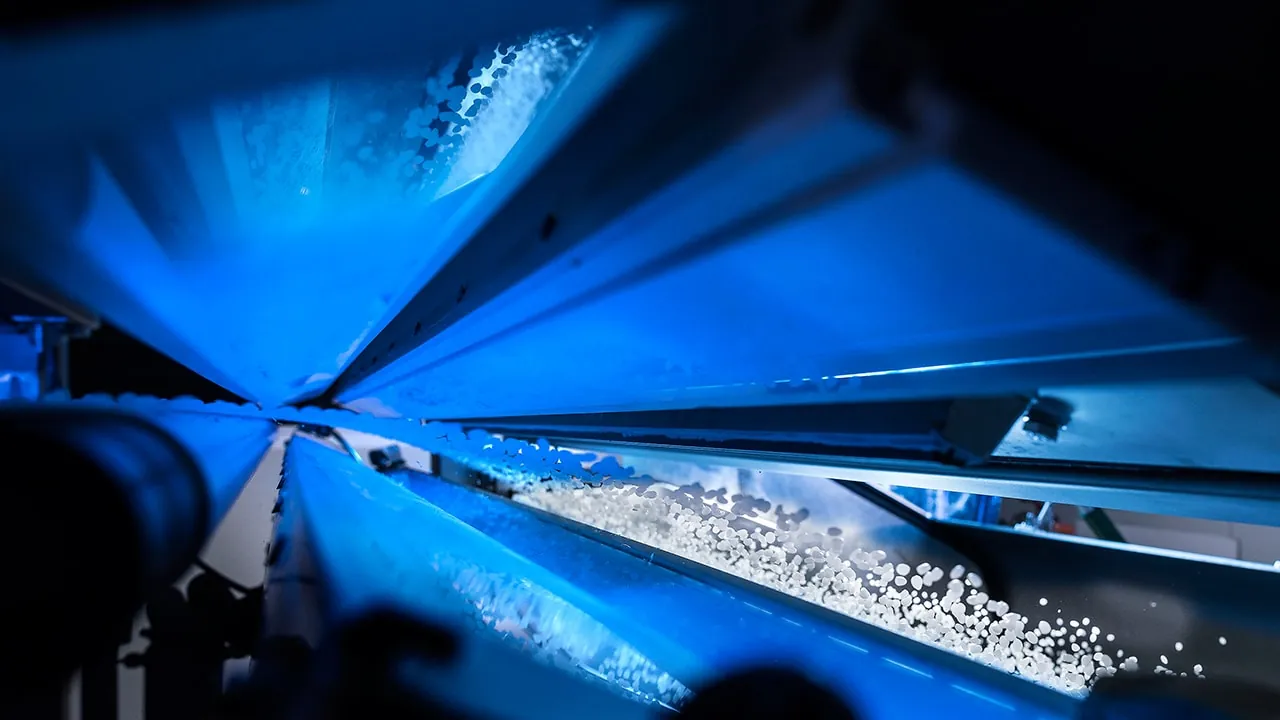
Quality problems are far cheaper to catch on the production line than after products reach a customer. Yet manual visual inspection is tiring, slow and inconsistent, especially at high volumes. Machine vision inspection uses cameras, lighting and software to check every part the same way, every time.
How machine vision inspection works
A typical inspection station combines four elements:
- Presentation: parts are fed and positioned so the camera sees them the same way each time.
- Lighting: controlled lighting makes the features that matter stand out, such as edges, holes, printing or surface marks.
- Cameras and software: images are captured and analysed against the expected result, measuring dimensions, checking presence and position, or looking for surface defects.
- Sorting: parts that fail are rejected automatically, often into separate bins by defect type, while good parts continue down the line.
What it can check
Vision systems are used for a wide range of checks in electrical and electronic assembly, including:
- Missing, extra or wrongly placed components
- Dimensions and positions within tolerance
- Correct orientation before the next assembly step
- Surface defects such as scratches, burrs or discolouration
- Printed markings, labels and codes
Benefits over manual inspection
The main advantage is consistency. A vision system does not get tired at the end of a shift, so the same standard is applied to the first part and the last. It can inspect at production speed, which removes inspection as a bottleneck, and it records results, giving quality teams data to trace problems back to their source.
Operators are freed from repetitive checking and can focus on running the line, handling exceptions and improving the process.
Where to place inspection
Inspection is most valuable at points where a defect would be expensive to fix later: after critical assembly steps, before parts are joined permanently, and just before packaging. Catching a problem early also stops more value being added to a part that will be rejected anyway.
Integrating inspection into automation
Vision inspection works best when it is designed into the assembly system rather than added afterwards. When feeding, assembly, inspection, sorting and packaging are planned together, parts move through the line in a controlled way and rejects are handled without stopping production.
Midsouth Automation integrates automated inspection and sorting into its customized assembly solutions. You can see an example in our optical sorting video, or contact us to discuss your inspection requirements.